Fiber is not a flashy nutrition trend, but it is one of the most useful things you can improve in your diet. The NHS says a diet rich in fiber can help digestion and prevent constipation, while NIDDK says fiber, together with enough liquids, can help make stools softer and easier to pass. Mayo Clinic adds that fiber can increase the weight and size of stool and absorb water, which can make bowel movements easier.
Most people would benefit from eating more of it. The NHS uses 30 grams of fiber a day as a general target, while NIDDK says adults generally need about 22 to 34 grams a day, depending on age and sex. Those numbers are close enough to make the real point obvious: many people are still eating less fiber than they probably should.
What counts as a high-fiber food?
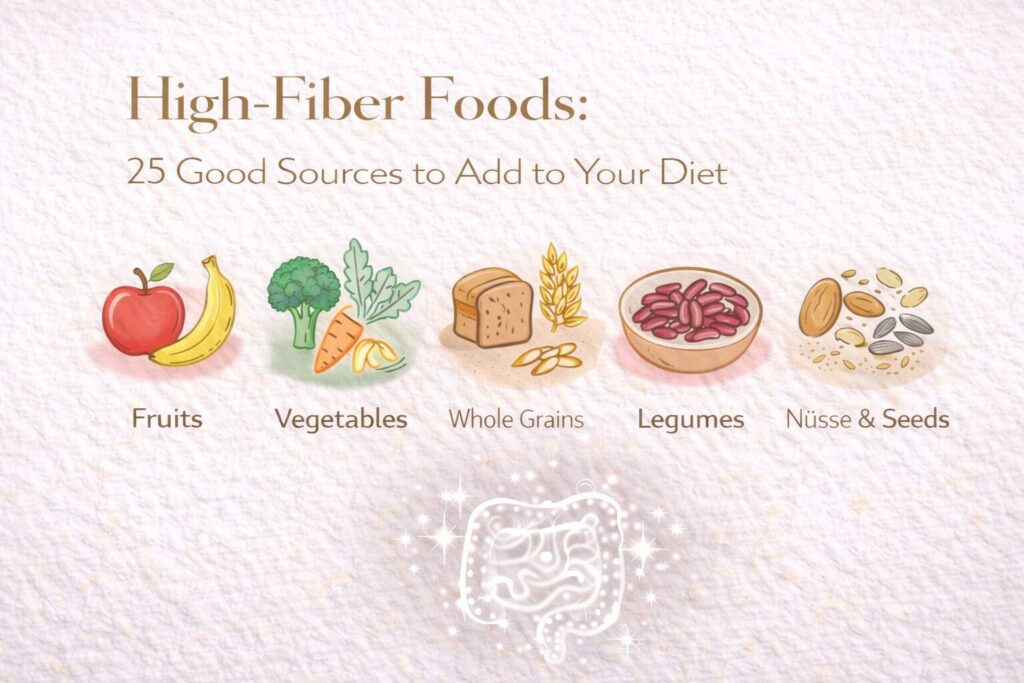
Fiber is found mainly in plant foods. Mayo Clinic says it is found in fruits, vegetables, whole grains, and legumes, while NIDDK lists whole grains, legumes, fruit, vegetables, and nuts as good sources. The NHS also recommends getting fiber from a variety of sources such as wholemeal bread, brown rice, fruit and vegetables, beans, and oats.
One important detail before the list: more fiber is helpful, but too much too fast can be uncomfortable. NIDDK recommends adding fiber gradually so your body gets used to the change, and the NHS also links fiber intake with drinking enough fluids. In plain terms, a sudden “perfect high-fiber diet” with very little water is not a particularly elegant digestive strategy.
25 high-fiber foods for everyday life
Whole grains and cereal foods
1. Oatmeal
One of the easiest ways to eat more fiber without changing your whole routine.
2. Bran cereal
A classic high-fiber breakfast option that can make a noticeable difference very quickly.
3. Whole-grain bread
A simple everyday swap if you want more fiber without much effort.
4. Whole-wheat pasta
A practical alternative to regular pasta when you want familiar meals with more fiber.
5. Brown rice
An easy upgrade from white rice if you want meals to feel a little more filling and fiber-friendly.
6. Wild rice
A good choice when you want more variety and a bit more texture in your meals.
7. Barley
Often overlooked, but a very solid grain if you want to broaden your fiber sources.
Legumes
8. Lentils
Very useful for high-fiber meals and easy to add to soups, stews, or grain bowls.
9. Chickpeas
Practical, versatile, and easy to use in salads, curries, or simple lunch dishes.
10. Black beans
A strong fiber source that works well in hearty, everyday meals.
11. Kidney beans
Filling, affordable, and a very reliable way to increase fiber.
12. Peas
Not glamorous, but genuinely useful and often easier to add than people expect.
Fruit
13. Apples with the skin on
Keeping the skin on makes a real difference when it comes to fiber.
14. Pears
One of the most useful fruits to include when you want a more fiber-rich diet.
15. Oranges
More than just a vitamin C food — they also help add fiber to the day.
16. Berries
Small, practical, and often richer in fiber than people assume.
17. Bananas
A very convenient option when you want something simple and easy to tolerate.
Vegetables
18. Carrots
An uncomplicated vegetable that fits easily into everyday meals and snacks.
19. Broccoli
A classic choice when you want to increase fiber through vegetables.
20. Green peas
A very practical option for quick meals and side dishes.
21. Green beans
A helpful vegetable if you want more fiber without making meals complicated.
22. Potatoes with the skin on
Much more useful from a fiber point of view when you keep the skin.
Nuts and seeds
23. Almonds
A handy way to add fiber in small amounts during the day.
24. Peanuts
Easy to include as a snack or in peanut butter form.
25. Flaxseeds
Very fiber-rich, but best added gradually and always with enough fluids.
The most important point is not finding one perfect food. A higher-fiber diet usually works best when you build it through regular, ordinary choices like oats, legumes, fruit, vegetables, whole grains, nuts, and seeds — and when you increase them gradually instead of trying to change everything overnight.

Which high-fiber foods are easiest to start with?
The most practical starting points are often the least dramatic ones: oatmeal or whole-grain toast at breakfast, lentils or beans in one main meal, fruit as a snack, and more vegetables or skin-on potatoes at dinner. The NHS gives similar everyday examples, including wholemeal toast with peanut butter and an orange, wholemeal spaghetti with lentil and tomato sauce, and a baked potato with vegetables. That is a useful reminder that a high-fiber diet does not need to look complicated to work.
How to recognize a high-fiber product when shopping
Checking the nutrition label helps more than trusting cheerful packaging. The NHS says a food can be described as high in fiber if it contains 6 grams or more of fiber per 100 grams. That is especially useful when you are comparing breads, cereals, crackers, or snack products and would rather rely on numbers than on marketing optimism
Common mistakes people make
The most common mistake is increasing fiber too quickly. NIDDK says adding too much fiber at once can lead to gas and bloating, and its IBS nutrition guidance recommends increasing fiber slowly, even by just a few grams a day. Another common mistake is focusing on only one source, such as cereal products, instead of eating fiber from a wider mix of grains, legumes, fruit, vegetables, nuts, and seeds.
The other classic mistake is forgetting fluids. NIDDK and the NHS both make it clear that fiber works better when it is paired with enough liquids. That part is not exciting, but it is useful — which, in nutrition, is often the more valuable trait anyway.
How to add more fiber without upsetting your stomach
The safest approach is usually the least dramatic one. Start with one higher-fiber breakfast, then add one legume- or whole-grain-based meal a day, and build from there with fruit, vegetables, nuts, or seeds. NIDDK recommends a gradual increase so the body can adjust, and the NHS also leans toward practical swaps rather than an all-at-once overhaul.
MY HEARTFELT RECOMMENDATION:
Why Forever Living Was a Game-Changer for Me
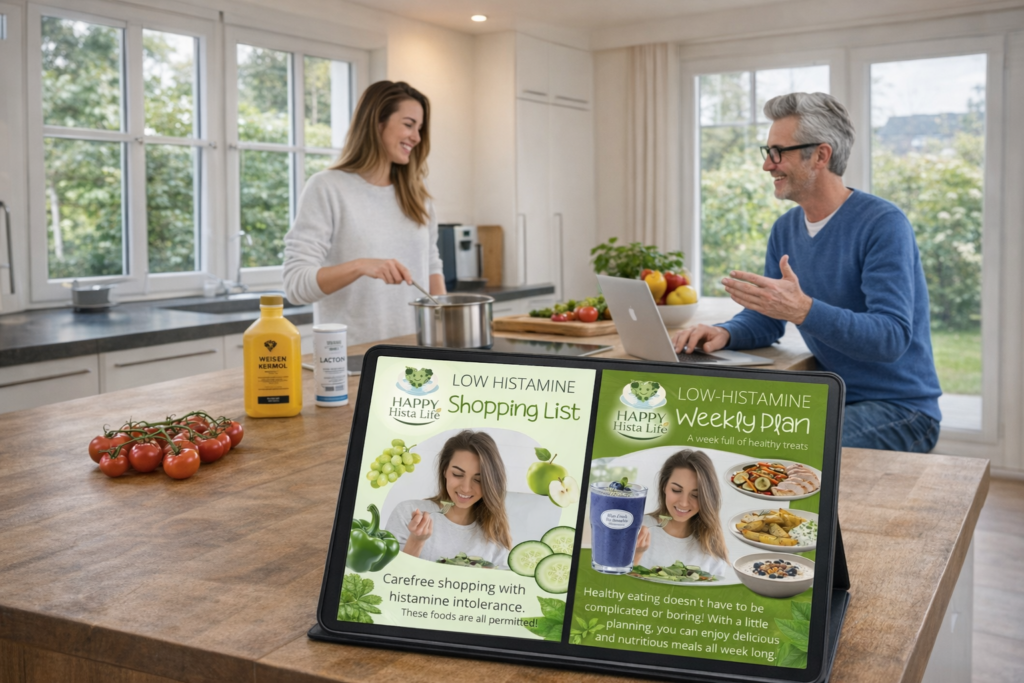
My dear friends, when we talk about gut health, we can’t ignore the quality of what we put into our bodies. Especially with histamine intolerance (HIT), our gut is often a sensitive “hotbed of trouble.” I searched for years and finally found the purity my body accepts with Forever Living. Why? Because Forever doesn’t just process aloe vera—it brings it to life—from the plant directly into the product, without unnecessary fillers or artificial additives.
Here are my three personal staples for your routine:
- Clean 9 (C9)*: My reset button! It’s not a diet, but a cleanse from the inside. It helps the body let go of the old and reset the microbiome—perfect for increasing histamine tolerance again.
- Aloe Vera Gel (Item 815)*: The “yellow gold.” With 99.7% pure leaf pulp, it’s like a gentle hug for your intestinal lining. Important for us: It contains no added citric acid, which could trigger us. A shot glass full (approx. 3.4 fl. oz.) in the morning works wonders.
- Forever Active Pro-B (Item 610)*: Probiotics are often tricky with HIT, but this formula with six synergistic bacterial strains is a godsend. It helps restore balance without causing the histamine barrel to overflow.
The products are linked to my shop if you’re interested.
FAQ
What are high-fiber foods?
High-fiber foods are mainly plant foods that contain a meaningful amount of dietary fiber. NIDDK and Mayo Clinic point to whole grains, legumes, fruits, vegetables, nuts, and seeds as the main categories. In practice, that means foods like oats, beans, apples, whole-grain bread, vegetables, and almonds are all strong places to start when you want to eat more fiber.
Which foods are especially high in fiber?
Strong everyday choices include oatmeal, bran cereal, whole-grain bread, lentils, chickpeas, black beans, apples with the skin on, pears, berries, broccoli, carrots, almonds, and flaxseeds. NIDDK and Mayo Clinic repeatedly highlight these kinds of foods as useful fiber sources. The bigger goal, though, is not finding one perfect option but building more variety into everyday meals.
How much fiber should I eat per day?
The NHS uses 30 grams a day as a general target, while NIDDK says adults usually need about 22 to 34 grams a day, depending on age and sex. The exact number matters less than the direction: many people still eat too little fiber. It also helps to raise intake gradually and drink enough fluids, because a sudden jump can make bloating and discomfort worse.
Can high-fiber foods cause bloating?
Yes, they can, especially if you increase them too fast. NIDDK advises adding fiber a little at a time so your body can adjust, and its IBS guidance notes that too much fiber at once may lead to gas and bloating. That does not mean fiber is the problem overall. Very often, the issue is simply pace — and sometimes too little water alongside the extra fiber.
What should I do if I do not tolerate more fiber very well?
Usually the better answer is not to quit, but to build more carefully. Increase fiber slowly, drink more fluids, and spread higher-fiber foods across the day instead of adding everything at once. The NHS also recommends getting fiber from a range of sources, which helps because some people handle certain foods better than others. A slower approach is often much kinder to the gut than a sudden “perfect diet” moment.
Final thoughts
High-fiber foods are not a niche wellness category. They are ordinary foods such as oats, whole grains, legumes, fruit, vegetables, nuts, and seeds. If you eat more of them regularly, increase them gradually, and drink enough water, you are doing something genuinely useful for digestion and overall diet quality. In this area, the boring fundamentals usually beat the dramatic shortcut.