All text passages marked with * are links to our shop or advertisements.
Cooking Without Regret: The Ultimate Guide to Your Low Histamine Dream Kitchen
From Kitchen-Fear to Culinary Freedom
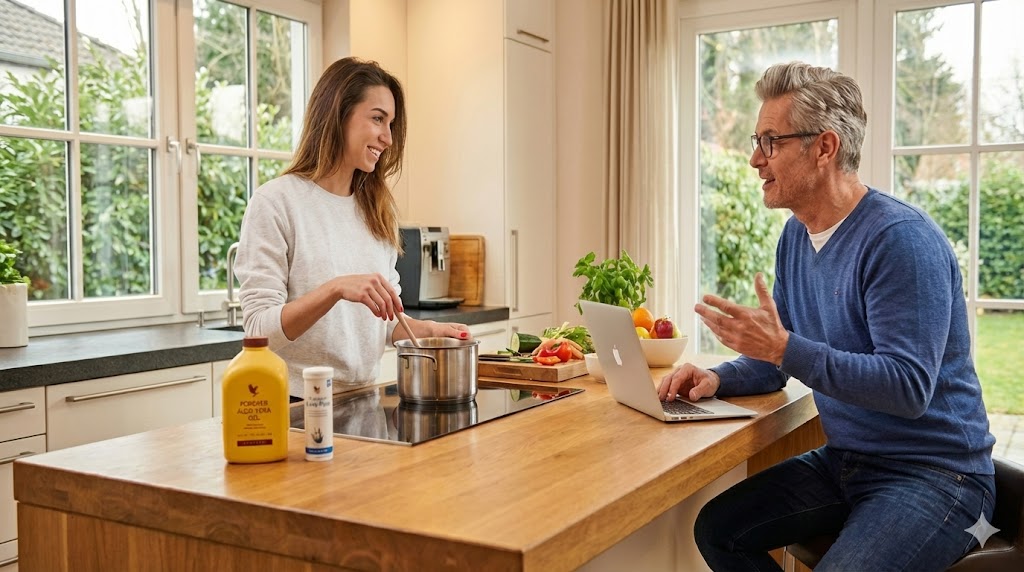
Do you remember the day you received your diagnosis? For me, the kitchen suddenly felt like a battlefield. I stood in front of my fridge, looking at spinach, tomatoes, and aged cheese, feeling like everything I loved was now a “trigger.” At Happy Hista Life, I want to show you that your kitchen can become a place of joy again. While Veit works behind the scenes to ensure our community has the best digital tools, I am here as your mentor to share the “Detective” secrets of a low-histamine dream kitchen. We aren’t just surviving; we are learning to bloom through flavor and freshness.
The Science of Freshness & The Bucket
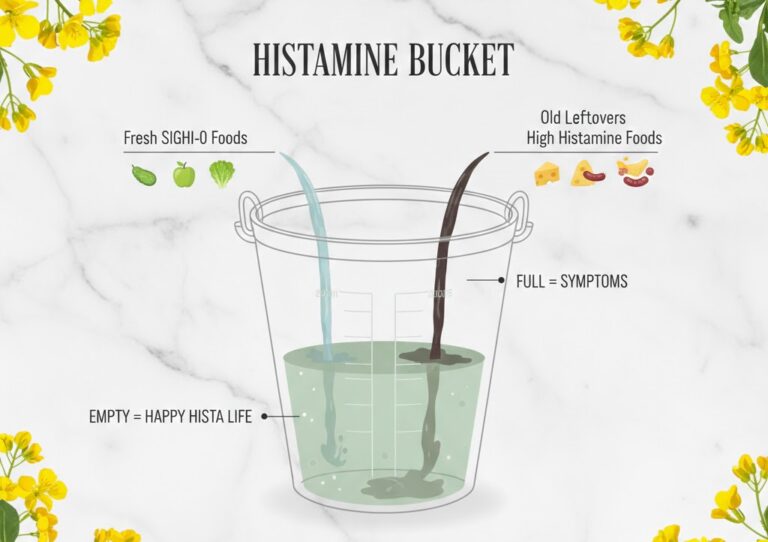
The number one rule in a low-histamine kitchen is: Freshness is everything. Histamine is produced by bacteria as food ages or ferments. This is why the “Freshness Rule” is your best friend. In my early days, I didn’t realize that even “healthy” leftovers from the night before could fill my histamine bucket to the point of overflow. By focusing on SIGHI-0 rated, ultra-fresh ingredients, you keep the baseline of your bucket low, allowing your body to handle the occasional challenge with ease.
The Essential Swaps: Unmasking the Liberators
In a dream kitchen, we don’t just “remove” things; we swap them for something better. One of the biggest breakthroughs in my journey was realizing that lemons and citrus fruits are hidden tricksters. Even though they are low in histamine, they are “liberators” that tell your mast cells to release their own histamine.
The Acid Swap: Say goodbye to vinegar and lemon juice. Instead, use Verjus (the juice of unripe grapes). It provides that perfect, sophisticated acidity without the flare.
The Spice Swap: Many pre-made spice blends contain hidden fillers. I shifted to using massive amounts of fresh herbs—parsley, basil, and mint—to bring life to my dishes.
The Golden Tools & Forever Support
A low-histamine kitchen requires a few specific “technical” adjustments, which is where Veit’s strategic thinking meets my culinary experience.
The Freezer is Your Best Friend: If you cook more than you can eat in one sitting, freeze the rest immediately in individual portions. This stops histamine production in its tracks.
Forever Aloe Vera Gel (Art. 815) *: I call this my “Kitchen Safety Net.” I start my cooking sessions with a glass of this 99.7% pure gel (2 fl. oz.). It provides a “cooling hug” for my gut lining, making me more resilient as I test new recipes.
Forever Active Pro-B (Art. 610) *: While you cook, your gut is working. Supporting your microbiome with these six synergistic strains ensures your DAO enzymes are ready to handle your meal.
Building Your Low Histamine Pantry
Creating your dream kitchen means stocking up on SIGHI-0 essentials. Think of fresh proteins (frozen immediately after purchase), safe grains like rice or quinoa, and a colorful array of safe vegetables like zucchini, carrots, and asparagus. In my kitchen, I always have a supply of Forever Fiber (Art. 464) * . It’s a mild, water-soluble fiber that I can easily stir into a sauce or a drink to ensure my digestion stays on track, which is vital for keeping the histamine bucket moving.

Your Fresh Start Starts Now
A low-histamine diet is not a life of “less”; it is a life of “better.” When you focus on high-quality, fresh ingredients and support your gut with the right nutrients, the fear disappears. You have me as your “Hista-Bestie” and Veit ensuring you have the roadmap to succeed. Let’s turn your kitchen into a sanctuary of flavor.
FAQ Section
Can I still use slow cookers in a low histamine kitchen?
This is a very important question for meal preppers! Unfortunately, slow cooking is the opposite of what a histamine-sensitive body needs. Because the food is kept at a warm temperature for many hours, bacteria have ample time to produce histamine. In my dream kitchen, I prioritize quick cooking methods like steaming, sautéing, or using a pressure cooker, which reduces cooking time and keeps the histamine levels at a SIGHI-compliant minimum for safety.
Is it okay to use bottled lemon juice for acidity?
This is a common “Kitchen Trap” I fell into early on! Lemons are histamine liberators, meaning they trigger your body to release its own stored histamine. Bottled juices are even more problematic due to preservatives and the aging process. In my recipes, I strictly avoid all citrus. For that sour note, I highly recommend Verjus or a tiny bit of ascorbic acid powder. This ensures your bucket stays low while still providing that refreshing tang you crave.
How do I handle leftovers safely if I can’t eat them the next day?
The secret to a Happy Hista Life is the freezer. Histamine levels rise even in the refrigerator. My rule is: if it’s not being eaten within 30 minutes of cooking, it goes into the freezer in an airtight container. When you’re ready to eat, thaw it quickly in the microwave or a pan. Avoid letting it sit on the counter to defrost. This “technical” tip from Veit and me is the single best way to prevent unexplained flares from “safe” meals.
Which oils are best for a low histamine dream kitchen?
For a calm gut, I stick to high-quality, cold-pressed oils. Extra virgin olive oil is my gold standard because it is anti-inflammatory and SIGHI-0 rated. I avoid walnut or sunflower oils, which can be problematic for some. Always store your oils in a cool, dark place to prevent oxidation. When you use fresh, high-quality fats, you don’t just support your DAO enzymes; you also enhance the flavor of your fresh vegetables, making every meal a true “Genuss.”
Can I use dried herbs if I don’t have fresh ones available?
Dried herbs are generally okay as long as they are single-ingredient and not part of a blend with hidden additives. However, fresh herbs are the “superstars” of a low-histamine kitchen. They contain more antioxidants and provide a much more vibrant flavor, which is essential when you’re skipping high-histamine sauces like soy or tomato. I always keep a “window garden” of parsley and basil. It’s a small step that makes your kitchen feel like a fresh start every day.

Thank you for being part of our journey!
Thank you so much for reading! We’re thrilled that you’re taking control of your own personal histamine journey. We sincerely hope these tips help you transform your home into a low-histamine oasis where you can finally breathe easy again and feel like yourself.
Stay inspired – our newsletter Don’t want to miss any more HIT-safe recipes or tips for a healthy gut flora? Then join our inner circle! As a special “thank you,” you’ll receive our exclusive free gift: the e-books “LOW-HISTAMINE Food and Shopping List” and “LOW-HISTAMINE Weekly Recipe Plan”.
We also invite you to our regular FREE Zoom calls with experts. Here you’ll gain first-hand insider knowledge about a low-histamine lifestyle and have the opportunity to ask your personal questions during our live Q&A sessions.
Click here to subscribe to our newsletter
Do you have any further questions? We’re here for you! Just send us an email at: info@happy-hista-life.com
Let’s shine together—in true low-histamine style!
Susi & Veit
“Health isn’t everything, but without health, everything is nothing.” – Adapted for our Hista-Besties